 Rapid City Hood Cleaning
 Exhaust Fan Cleaning & Repair in Rapid City
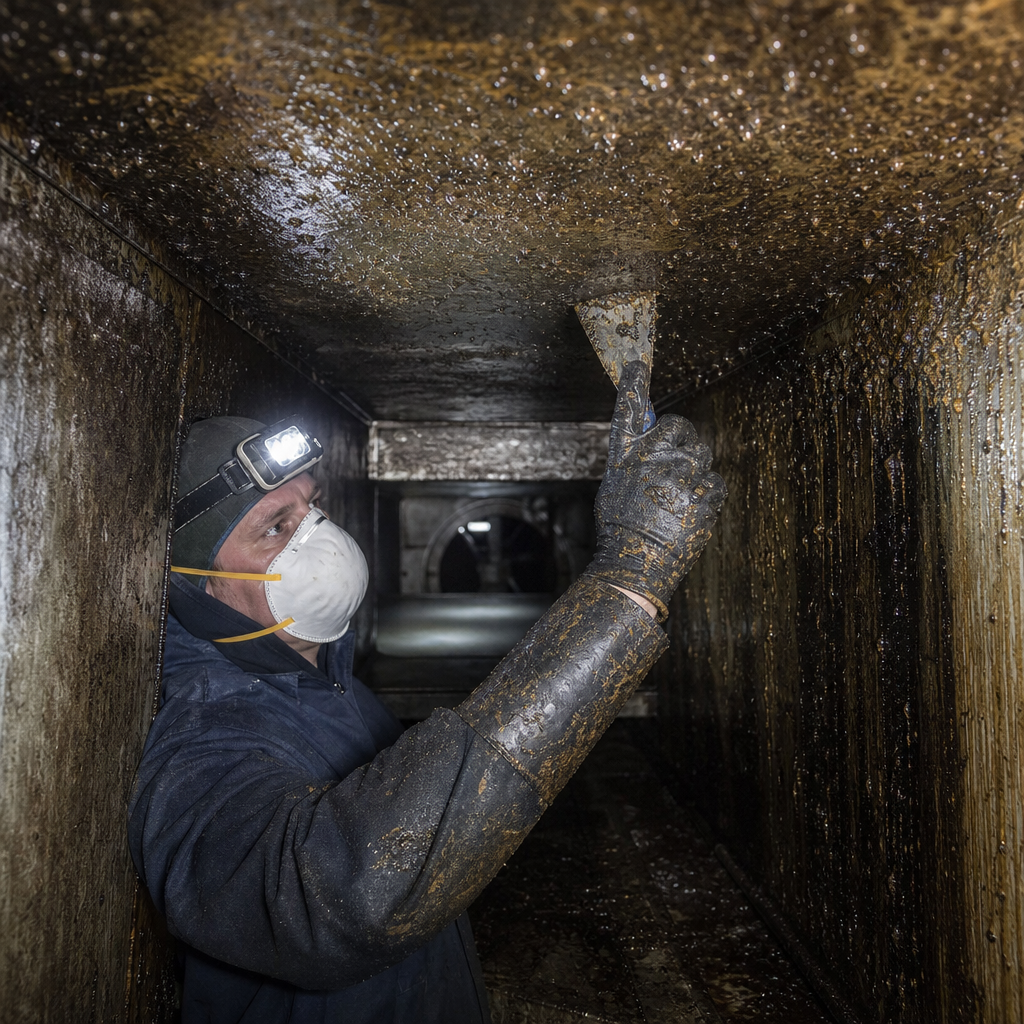
The rooftop exhaust fan is the hardest-working and worst-maintained part of most restaurant exhaust systems. It’s out of sight, it’s caked in the heaviest grease in the system, and it’s the only component with moving parts that can strand your kitchen mid-service. Fan cleaning and mechanical checks are part of every full-system service we arrange in Rapid City, and standalone fan work (degreasing, belts, bearings, hinge kits at $150–$300, and grease containment) is available on its own.
The dirtiest point in the system
Everything your cook line sends up the duct ends at the fan. Grease vapor that stayed airborne through the run condenses in the fan housing and gets flung outward by the wheel, which is why NFPA 96 assigns fan housings their own, higher cleaning trigger: 0.125 in. of grease depth, versus 0.078 in. elsewhere in the system. When a technician measures with a depth-gauge comb during an inspection, the fan is routinely the reading that forces the cleaning.
Cleaning it properly means opening the fan, hand-scraping the housing and wheel, washing to bare metal, and putting it back in balance, not spraying degreaser through the intake and calling it done. A grease-loaded wheel also runs out of balance, which chews bearings and belts and shortens the life of the whole unit. Clean fans are cheaper fans; that’s the maintenance argument stacked on top of the fire-code one covered on the NFPA 96 compliance page.
What fan service covers
Degreasing to bare metal. Housing, wheel, and shroud, scraped and washed as part of a full-system cleaning or a standalone visit.
Belt and bearing checks. The fan is already open: checking belt tension, glazing, and cracking, and feeling bearings for heat and play, takes minutes and catches the failures that otherwise happen at 7 p.m. on a Saturday. Worn parts get flagged in the service report with a straight recommendation, not an automatic upsell.
Hinge kit installs: $150–$300. If your fan sits bolted flat to its curb, every service means unbolting and lifting the unit, which risks the wiring and shortcuts the cleaning of the duct’s top section. A hinged base tips the fan back instead. It’s a one-time install that makes every future service faster and more complete, and it’s the single most common upgrade crews recommend on older Rapid City roofs.
Grease containment. Working fans throw grease. Without a containment system at the base, it lands on the roof membrane, where it degrades roofing, stains everything downslope, and creates a slip hazard for anyone working the roof. Containment systems get installed, checked, and their absorbent media changed on the same cadence as fan cleaning.
Weather realities. This is outdoor work in a place with real winters and real wind. Crews plan fan service around Black Hills weather (icy steep-pitch roofs get scheduled, not improvised) and that’s one more reason the big mechanical jobs belong in the shoulder season rather than in a January emergency.
Why seasonal kitchens should care most
A fan that idles through a slow winter and then runs 14-hour days all summer takes its wear in a compressed season: exactly the pattern for tourism-corridor kitchens from downtown Rapid City out to Spearfish, and in the extreme for Sturgis during rally weeks, when bars and food operations run at maximum output for a fortnight straight. The honest schedule: mechanical checks and any belt, bearing, or hinge work in spring before the surge, a cleaning-and-inspection pass after it. A fan failure in August, with every kitchen in the northern Hills at capacity and every service crew booked, is the most expensive possible version of a $40 belt.
Cost
| Fan work | Typical price |
|---|---|
| Fan cleaning (within full-system service) | included in the $300–$700 single-hood range |
| Rooftop fan hinge kit install | $150–$300 (parts + labor vary) |
| Belt/bearing replacement | quoted per fan after inspection |
| Grease containment install/media change | quoted per roof |
Fan count, roof access, and unit condition move the numbers, the free walkthrough covers the roof, not just the kitchen. Published ranges for everything else are on the pricing page.
Booking
Fan service slots into the same overnight windows as hood cleaning, and standalone roof visits can run in daytime hours without touching your line. Send the form for a free walkthrough quote or call (605) 450-7748: Rapid City, Box Elder, Sturgis, Spearfish, and Summerset.
Frequently Asked Questions
Why does the rooftop fan matter so much?
It's the end of the grease path and usually the dirtiest point in the system. NFPA 96 gives fan housings their own cleaning threshold, 0.125 inches of grease depth versus 0.078 for other surfaces. It's also the only moving machinery in the system: a seized fan means no exhaust, and no exhaust means no cooking.
What's a hinge kit and why do crews keep recommending one?
A hinge kit lets the fan tip back on a hinged base instead of being fully unbolted and lifted off the curb. That makes every future cleaning faster and safer, gives full access to the duct's top section, and protects the fan's wiring from being stretched or torn during service. Installed it runs $150–$300, parts and labor varying with the fan.
What is grease containment on the roof?
A collection system around the fan base that catches the grease a working fan throws off, so it doesn't pool on the roof membrane. Ponded grease degrades roofing and creates a slip and fire hazard at the exact spot technicians work. Containment gets checked and the media changed as part of routine fan service.
Can fan problems be caught before the fan dies mid-shift?
Usually, if someone looks. Squealing on startup points at belts, vibration and hot bearings show up before seizure, and both get checked whenever the fan is open for cleaning. Belt and bearing swaps in a planned window cost far less than an emergency call on a Friday night with a full dining room.