 Rapid City Hood Cleaning
 Restaurant Hood & Duct Cleaning in Rapid City
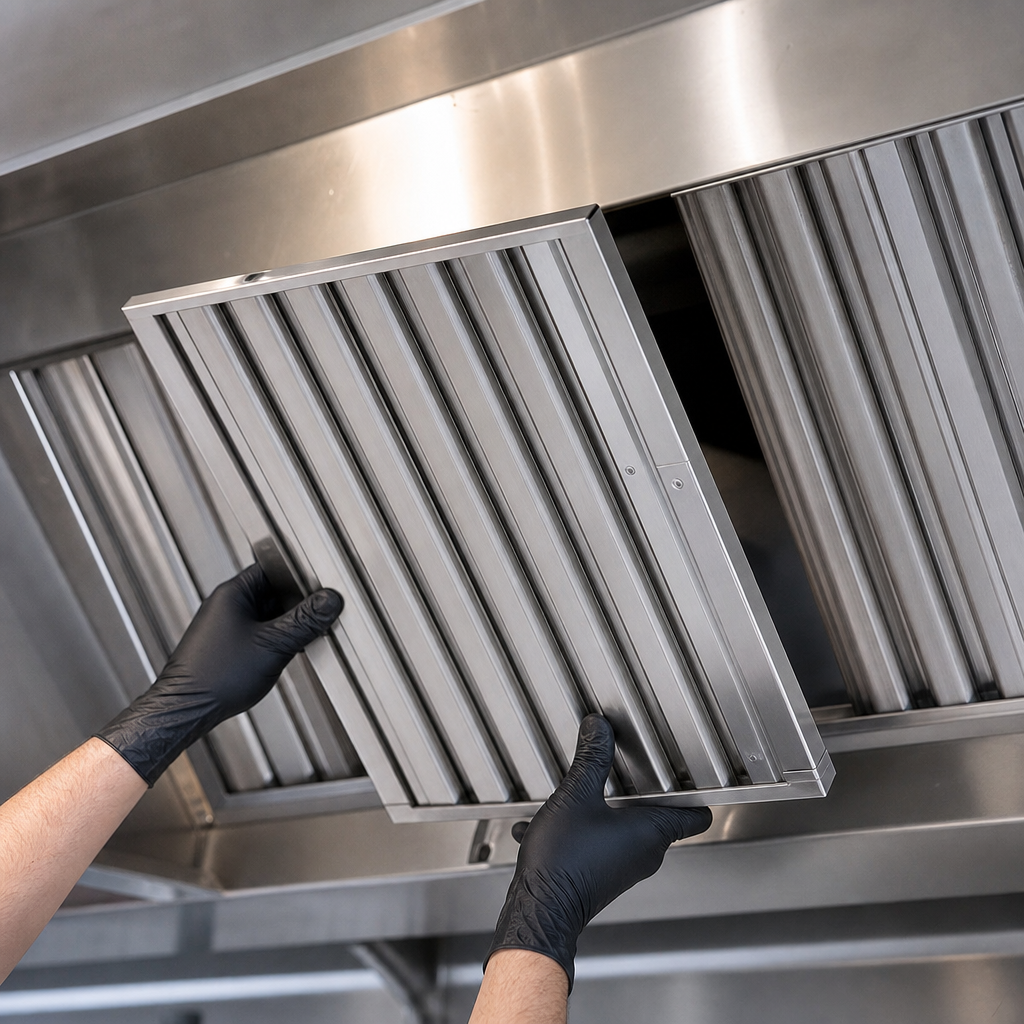
Restaurant hood cleaning done to code means the whole exhaust system (canopy, baffle filters, plenum, ductwork, and the rooftop fan) cleaned to bare metal, not a degreaser wipe of the stainless you can see from the line. In Rapid City that standard comes from NFPA 96, pulled into force by the 2024 International Fire Code the city adopts, and a full single-hood service typically runs $300–$700, performed overnight by certified, insured local crews.
This page covers what the service actually involves, hood to fan, so you can tell a real NFPA 96 cleaning from the cheap version before you pay for either.
Why the whole system, not just the hood
Grease-laden vapor leaves your cook line, passes through the baffle filters, collects in the plenum, and condenses along the duct on its way to the fan. Every surface it touches accumulates fuel. A fire that starts at the appliance can climb through a loaded duct in seconds, which is why the fire code cares about the parts of the system nobody in the kitchen ever sees.
That’s also where corner-cutting happens. “Hood cleaning” outfits that quote suspiciously low are usually pricing the canopy and filters, the two hours of visible work, and leaving the duct run and fan alone. The system looks serviced and isn’t. NFPA 96’s cleaning endpoint exists to prevent exactly that: after a proper service, residual combustible contaminant can’t exceed 0.002 in. (50 µm), bare metal, and the method standard the fire code cites is ANSI/IKECA C10.
What a full service looks like, step by step
1. Prep. Appliances covered and pilot lights addressed, floors and counters sheeted in plastic, electrical protected, and a containment path set up so grease-laden wash water goes into recovery, not across your kitchen or down a storm drain.
2. Filters out. Baffle filters come down and get soaked and washed separately, or flagged for replacement if they’re bent or burned through. Damaged baffles let grease bypass straight into the plenum; the filter exchange page covers when swapping beats washing.
3. Scrape and wash the canopy and plenum. Heavy deposits are hand-scraped first, then chemical is applied and the surfaces are hot-water pressure-washed to bare metal.
4. The duct run. Access panels come off and every reachable section gets the same treatment. Long horizontal runs with elbows take the most time and are the main reason quotes vary, and if a section can’t be reached, the service report says so explicitly, because an inaccessible duct is a finding you and the fire inspector both need to know about.
5. The rooftop fan. The fan is opened up, degreased, and washed; the fan housing has its own grease threshold under NFPA 96 (0.125 in.), and it’s where the heaviest buildup usually lives. Belts, bearings, and hinge kits are checked while it’s open, details on the exhaust fan service page.
6. Dry, polish, document. The kitchen is rinsed, dried, and polished, and the crew leaves the three-part compliance product: before-and-after photos, a written service report, and a dated certification sticker on the hood. That’s what the Rapid City Fire Department’s inspectors ask to see, and what insurance carriers request after an incident.
How often: the honest answer
NFPA 96 Table 12.4 sets inspection frequency by cooking volume:
| Cooking operation | Inspection frequency |
|---|---|
| Solid-fuel (wood, charcoal) | Monthly |
| High-volume (24-hour, charbroiling, wok) | Quarterly |
| Moderate-volume | Semiannually |
| Low-volume (churches, seasonal, day camps, senior centers) | Annually |
Cleaning is then triggered by what the inspection finds: grease measured with a depth-gauge comb, cleaned at 0.078 in. (2000 µm) on surfaces. High-volume kitchens hit that threshold at roughly the inspection cadence, which is why the trade talks in “quarterly cleanings”, but the mechanism protects you both ways. A low-volume kitchen shouldn’t be upsold monthly service, and a wood-fired steakhouse shouldn’t believe an annual visit covers it. The full standard is unpacked on the NFPA 96 compliance page.
The Black Hills wrinkle: grease load tracks cooking volume, and volume here is seasonal. A Mount Rushmore Road kitchen doing double covers from June through September loads its duct twice as fast as it did in February. Spring deep cleans before the tourist surge, and before rally season hits Sturgis, are the schedule that fits how this market actually cooks.
What it costs
| Configuration | Typical price |
|---|---|
| Small single hood | $200–$450 |
| Standard single-hood system | $300–$700 |
| Large or complex single system | to $800+ |
| Multi-hood line (2–4 hoods) | $800–$1,500 |
| Solid-fuel / heavy 24-hr systems | high end, monthly or quarterly cadence |
Price depends on hood count, duct run length, roof access, grease load, and how long since the last service. The free walkthrough turns the range into a firm number. First cleanings on neglected systems price high and the follow-ups get cheaper once the cadence is right. Rush pre-inspection work runs a 25–50% premium, which is the best argument for never needing it. Full detail on the pricing page.
Booking it
One overnight, a cold cook line, and your kitchen back by first prep, with the sticker dated and the photos in your inbox. Send the form for a free walkthrough or call (605) 450-7748. Service runs across Rapid City and the I-90 corridor: Box Elder, Sturgis, Spearfish, and Summerset.
Frequently Asked Questions
What does a full hood cleaning include?
The entire grease path: hood canopy, baffle filters, the plenum behind them, every accessible section of ductwork, and the rooftop exhaust fan, scraped and hot-water pressure-washed to the NFPA 96 bare-metal standard. The crew finishes with before-and-after photos, a written service report, and a dated certification sticker on the hood.
How long does the service take, and when?
A single-hood system is typically one overnight visit: a few hours after close, with the kitchen prepped, washed, dried, and handed back before first prep. Multi-hood lines or long duct runs can take a full night or two visits. Nobody cleans a hood during service hours; the cook line has to be cold.
How do I know the duct actually got cleaned and not just the shiny canopy?
The photos. A proper service documents the plenum, duct interior, and fan before and after, bare metal is visible in a photo. If a vendor's 'after' shots only show the polished canopy, that's the tell. The service report should also note any inaccessible duct sections, because those are a real finding, not a footnote.
How often should my Rapid City kitchen be cleaned?
NFPA 96 sets inspections by cooking volume: monthly for solid fuel, quarterly for high-volume (24-hour, charbroiling, wok), semiannual for moderate, annual for low-volume operations. Cleaning happens when the inspection finds grease at the threshold, 0.078 inches on surfaces. Busy kitchens land at roughly the inspection cadence in practice.
What does it cost?
A single-hood system runs $300–$700 per service, small hoods $200–$450, large or complex systems to $800 and up. Multi-hood lines (2–4 hoods) run $800–$1,500. Duct length, roof access, and grease load move the number; the walkthrough quote is free and firm.